How many restrooms does a race in Downey need?
Start with the field size, then spread units along the route instead of clustering them all at the start corral. A field of 500 needs a different setup than 5,000, and how many porta potties do i need walks through the math for staging by mile marker. Downey Porta Pros builds most race plans around standard porta potty rental units at the start and finish, with smaller clusters at hydration points. OSHA 1926.51(c) sets a construction ratio of one toilet per 20 workers, and while a race isn't a jobsite, race directors use it as a reasonable floor when nothing else applies. ADA Standards section 213.2 requires that at least 5 percent of any cluster of single-user toilets be accessible, never fewer than one, so a bank of ten units at the finish line needs at least one ADA accessible porta potty. That unit needs a 60 inch turning circle inside per ADA Standards section 304.3.1, and the route to it has to stay clear per section 403.5.1's 36 inch minimum path width. Weekend races pay a flat rate rather than a daily one, since most events run Friday setup through Sunday teardown. Larger events, like a marathon expecting a big spectator crowd, sometimes add an event restroom rental package that bundles service visits into the price. If your race benefits a cause or draws a title sponsor, a deluxe flushable porta potty or two near the VIP tent reads better in photos than a standard bank.
Where should race organizers place units along the course?
Placement matters more for a moving race than a static event. Aid stations need units set back from the running lane on stable, level ground, since ADA Standards section 302.1 requires surfaces that are firm and slip resistant, not gravel that shifts under a wheelchair user. porta potty placement guide covers ground prep and clearance in more depth. Downey's course logistics often overlap with power needs at the finish line: timing clocks, PA systems and food vendor booths all draw current, and a temporary power pole run to a 200 amp service is common for larger finish festivals. Knowing how to brace a temporary power pole matters here: guy wires and ground anchors need to run clear of the accessible route required by ADA 403.5.1, and the pole assembly should be staked on firm ground away from foot traffic pinch points, ideally with a barricade meeting OSHA 1926.202's ANSI D6.1 standard around the base. A temporary fence rental or crowd control barrier rental does double duty, keeping spectators off the power drop and organizing the restroom queue at the same time. For races that finish near a venue with vehicle access, a restroom trailer rental can serve VIP or staff needs without competing with runner traffic. Downey courses that loop through neighborhood streets sometimes need units repositioned mid-race for a second wave or a kids' fun run; plan for that in the delivery schedule rather than as a same-day scramble.
What does restroom rental cost for a race in Downey?
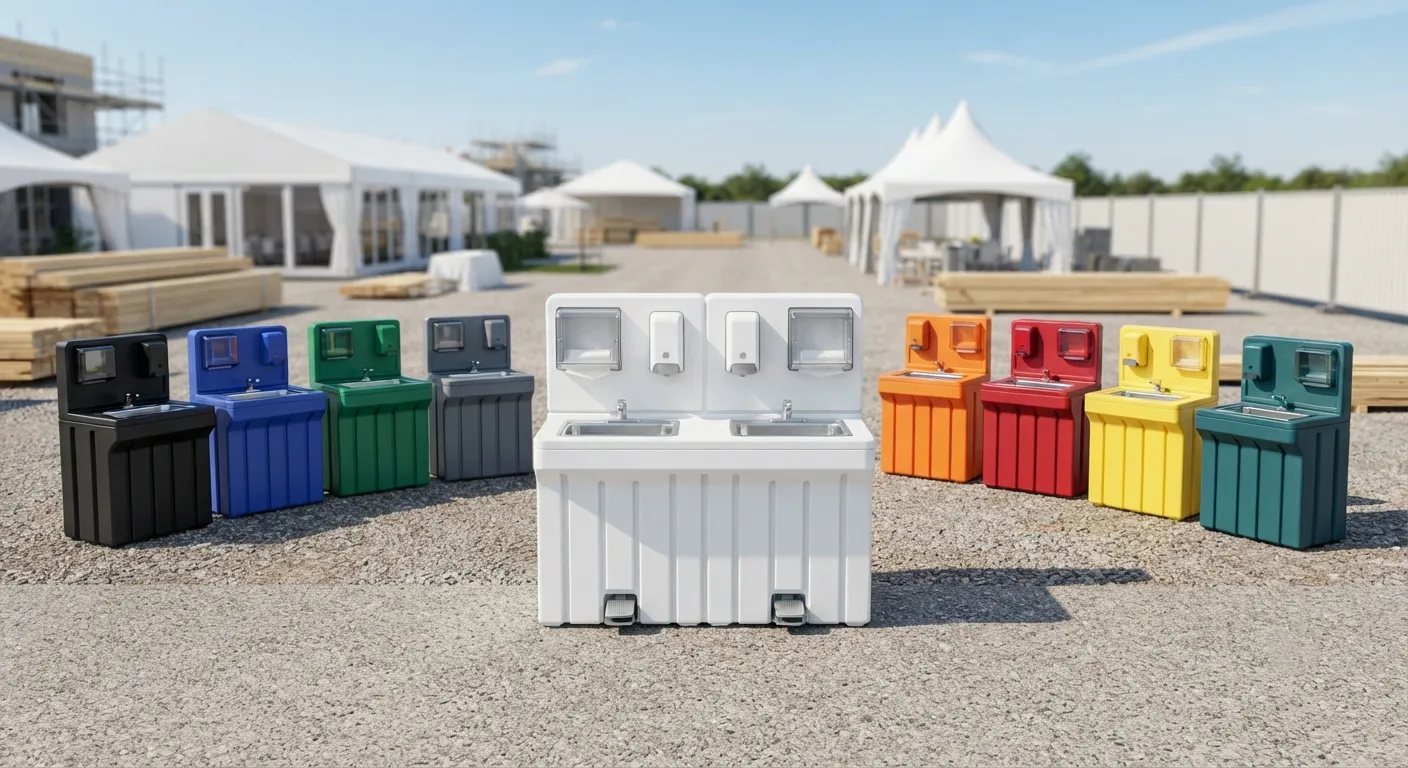
Race budgets should separate the unit rate from delivery and service fees, since both get billed separately from the rental itself.
| item | duration | typical price |
|---|---|---|
| standard unit | weekend | $250 |
| standard unit | event (multi-day) | $400 |
| ADA unit | weekend | $240 |
| delivery fee | weekend | $200 |
| service fee | weekend | $700 |
Full detail on how these add up lives at porta potty rental cost, and race directors budgeting month to month for a series of events should check monthly porta potty rental instead of booking each race separately. Downey events near Bell Gardens, 3.1 miles northwest, or Pico Rivera, 5.5 miles northeast, sometimes pull from the same delivery run, which can shave the delivery fee. A request a quote with your route map and expected field size gets a faster, more accurate number than a generic per-unit price. For races with a beer garden or food festival tacked onto the finish, ask about a festival restroom rental package instead of pricing units piecemeal.
Do we need ADA units even for a small local 5K?
Yes. ADA Standards section 213.2 applies to any cluster of portable toilets, regardless of event size, requiring at least one accessible unit per cluster. A field of 50 runners still needs an accessible option at the start and finish if standard units are grouped there. Check ada restroom requirements for full detail.
How far in advance should we book race restrooms in Downey?
Book as soon as the course and date are set, ideally 60 to 90 days out for a race with 500 or more entrants. Popular race weekends fill delivery slots fast, and Downey Porta Pros needs lead time to route trucks efficiently across multiple aid stations.
Can restrooms be moved between mile markers during the race?
Yes, with advance planning. Units can be repositioned before a second wave or relocated overnight for a multi-day event, but this needs to be scheduled with delivery, not requested race morning.
What is the delivery clearance needed for restroom trailers at the finish line?
A restroom trailer rental needs a clear approach for the delivery truck, similar to the 60 foot straight clearance a roll-off delivery requires. Confirm the finish line layout allows truck access before booking a trailer over standard units.
Do we need a permit to place restrooms on Downey streets?
Placement in the public right of way needs confirming with the City of Downey directly; specific permit rules aren't listed here. See porta potty permit requirements for a general overview before you finalize your course map.
Next step
Get a delivery date
Tell us the address, the dates and the headcount. We size the order and confirm the route.