How Do Porta Potties Work?
The design is simpler than people expect. Under the seat sits a holding tank, and a packet of blue chemical goes in fresh at every service to break down waste and knock down odor. There is no water line, no flush, no plumbing hookup. That is why a standard porta potty rental can drop almost anywhere on a Downey job site without a permit for water access. The unit itself is small, about 44 by 48 inches on the ground and 92 inches tall, so it fits in tight side yards or along a fence line. Ventilation stacks pull odor up and out through a roof vent. A construction worker walking to a porta-potty on break doesn't need to hunt for a spigot or outlet, because none of that exists inside the unit. Service techs pump the tank, wipe down the interior, restock supplies and refill the chemical on each visit. If you're staging units for a crew, how many porta potties do I need walks through the math by headcount.
How Do Flushable Porta Potties Work?
A flushable unit, sometimes called deluxe, uses a small onboard freshwater tank and a hand pump or foot pump to push a rinse of water into the bowl after each use. It still drains into the same sealed holding tank below, it just doesn't rely purely on chemical breakdown between services. That is the core difference covered on our deluxe flushable porta potty page. These units suit longer events or office-style jobsites in Downey where people expect something closer to a real bathroom. For full-scale plumbing with sinks and multiple stalls, a restroom trailer rental is the next step up, and the 2 stall restroom trailer is a common fit for smaller crews or backyard weddings.
How Does a Portable Sink Work?
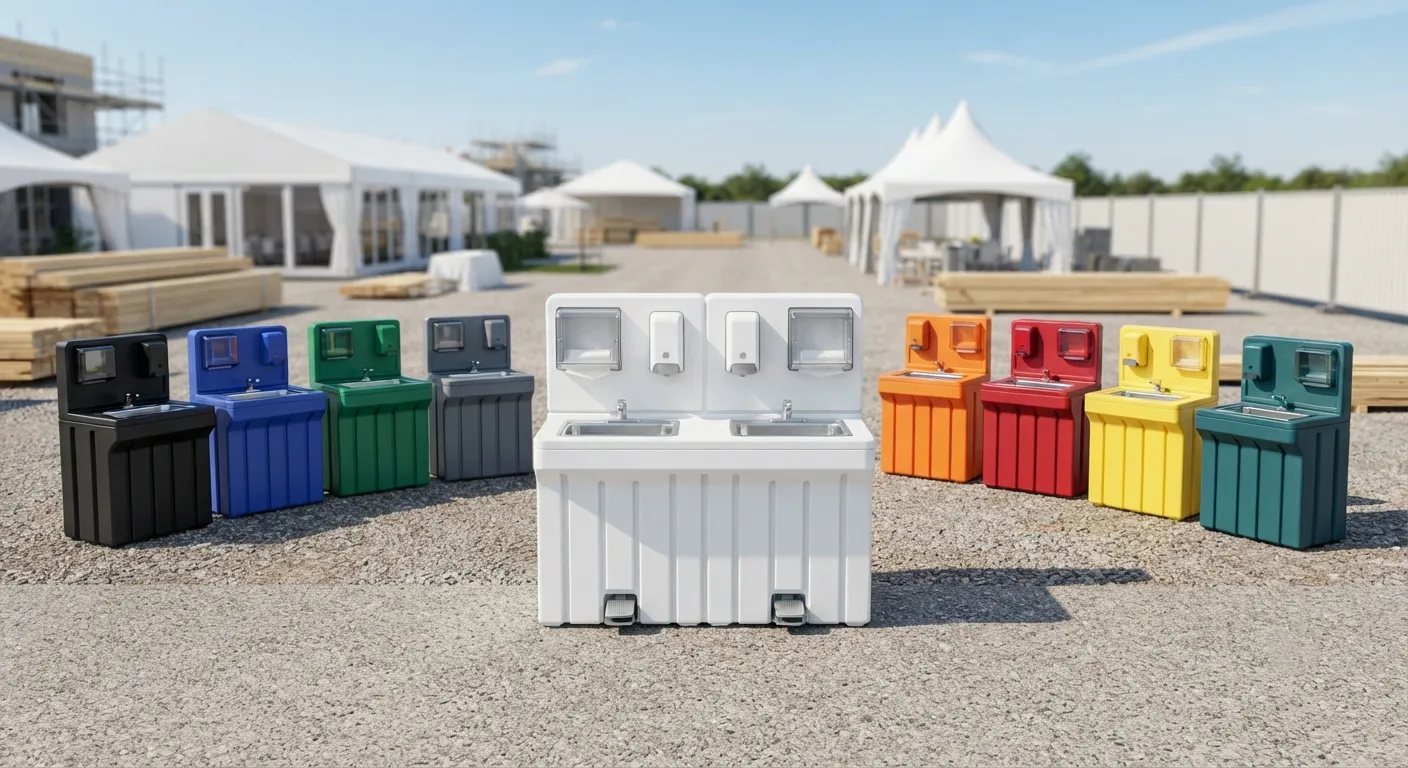
A portable sink runs on a similar principle to the toilet: onboard fresh water, a foot pump or hand pump to bring it to the tap, and a graywater tank underneath to catch the runoff. No plumbing connection needed, so it sets up anywhere a crew needs it, including next to a cluster of standard porta potty rental units on a food truck lot or fairground. Under 29 CFR 1910.141(d)(2), washing facilities need soap and towels or a hand-drying device. Hand sanitizer alone does not satisfy that. That is why our handwashing station rental pairs a soap dispenser and paper towel holder with the water tank, not just a sanitizer pump. A portable sink rental is the standalone version of the same unit, useful for catering setups or agricultural crews under OSHA 1928.110, which sets water and handwashing access within a quarter mile walk for hand-labor employees.
What Chemicals Go in a Porta Potty?
The blue liquid added at each service is a deodorizing, waste-breakdown chemical, refreshed on every pump-out. It is not the same product used for septic tank cleaning chemicals in a house system, and it should not be confused with grease trap treatment either. If you are searching "portable toilet chemicals near me" because a unit smells off between services, that is usually a sign the pump-out interval needs adjusting rather than a chemical swap. ANSI/PSAI Z4.3, the industry service standard, sets a baseline of one visit per week for up to 10 users over a 40 hour week, though busy Downey sites often need more frequent stops. For camping trips, the same chemical and tank setup applies. How do camping porta potties work is really the same question as job site units, just smaller and towed on a trailer instead of delivered by truck. Curious about the swap-out process itself? How do porta potties work style questions usually lead people to how often are porta potties cleaned next.
| Unit | Day | Week | Month |
|---|---|---|---|
| Standard | $100-$350 | $130-$500 | $125-$325 |
| ADA accessible | $200-$400 | -- | -- |
| Deluxe flushable | $85-$1200 | $150-$290 | -- |
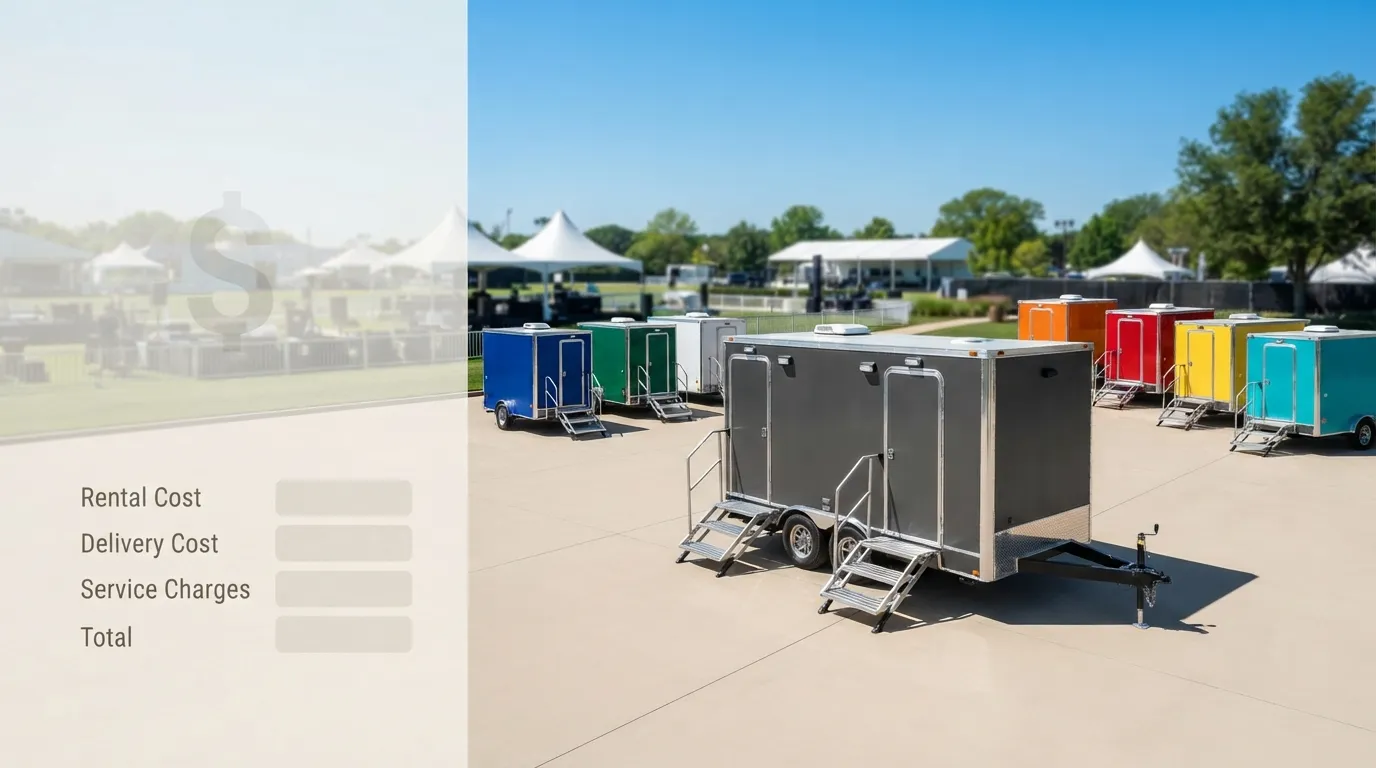
Prices above reflect measured ranges across the category, not a fixed quote. Downey Porta Pros can confirm exact pricing for your job through request a quote. For a fuller breakdown by rental length, see porta potty rental cost, porta potty rental per day and monthly porta potty rental.
Accessible units matter on most job sites and public events. ADA Standards section 213.2 requires that where single-user portable toilet units are clustered, at least 5 percent, and never fewer than one unit, must be accessible. Our ADA accessible porta potty page covers the wider clearance and grab bar setup inside those units, and ADA restroom requirements covers the broader standard. On construction sites specifically, OSHA 1926.51(c) sets toilet counts by crew size: one toilet for 20 workers or fewer, scaling up from there. Downey job sites near Bell Gardens, about 3.1 miles northwest, or Pico Rivera, 5.5 miles northeast, follow the same federal ratio regardless of which side of the city line the crew works. For details on both, see OSHA portable toilet requirements and construction site services.
Placement matters as much as unit type. A flat, stable surface is best, and if the unit sits near a public walkway, keep in mind ADA Standards section 403.5.1 calls for 36 inches of clear route width. Our porta potty placement guide covers ground conditions and clearance in more depth, including for events with heavy foot traffic like a Downey festival or fair. If you are staging a cluster for a wedding or race, event restroom rental and marathon and race restrooms both walk through headcount planning specific to that use case.
Do porta potties smell?
They can, but a well-serviced unit shouldn't hold odor between visits. The blue chemical controls bacteria growth, and the roof vent pulls gas up and out rather than back into the stall. Service frequency matters more than the unit itself. See do porta potties smell for what drives odor and how to prevent it.
How often does a porta potty get serviced?
The industry baseline under ANSI/PSAI Z4.3 is one visit per week for up to 10 users across a 40 hour week. High-traffic construction sites or multi-day events in Downey often need two or three visits weekly. Talk to Downey Porta Pros about your headcount before locking in a schedule.
Can I put a porta potty on pavement or grass?
Both work, but a flat, level surface is what matters most. Grass needs to be firm enough that the unit won't tip, and pavement should be clear of slope. Our porta potty placement guide covers surface prep in more detail.
What is the difference between standard and deluxe units?
A standard unit uses only the chemical breakdown method with no water. A deluxe or flushable unit adds a small freshwater tank and a foot or hand pump to rinse the bowl after use. Both drain into the same holding tank underneath.
Do portable sinks need a chemical too?
No. A portable sink uses only fresh water and soap, draining into a graywater tank. It does not use the blue chemical found in a toilet unit, since there's no waste breakdown involved, just handwashing runoff.
Next step
Get a delivery date
Tell us the address, the dates and the headcount. We size the order and confirm the route.